Sudoku Strategies for When You’re Stuck: A Checklist
Published Jun 22, 2026
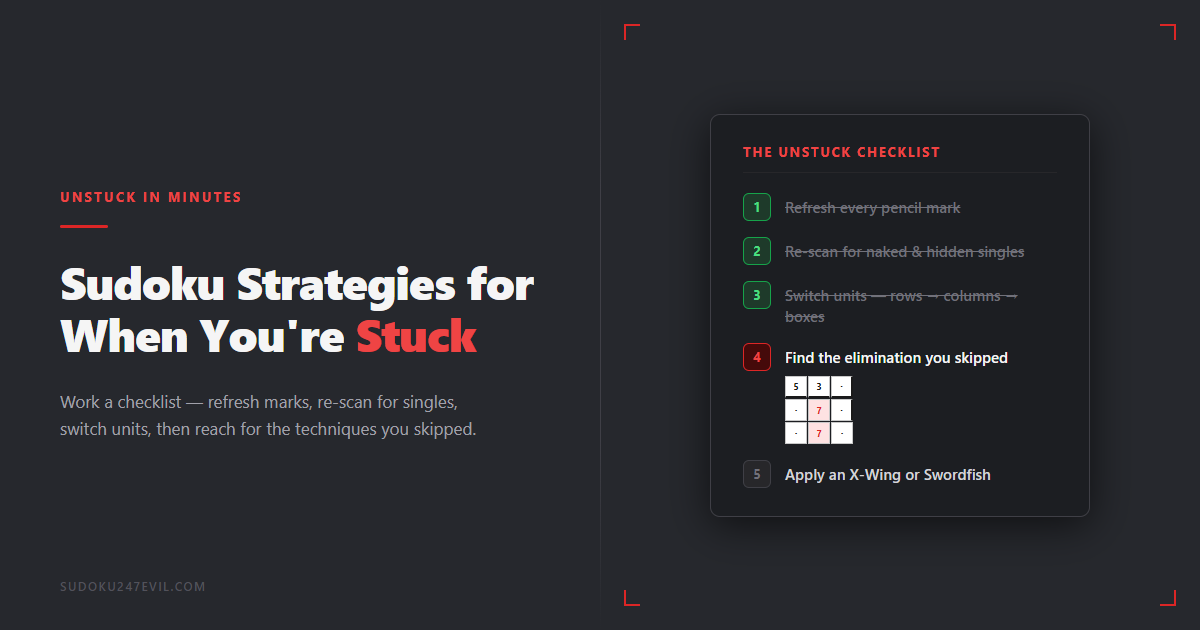
When you’re stuck on a sudoku, don’t stare harder — work a checklist. A wall almost always means one of two things: a pencil mark is out of date, or there’s a technique you walked past. Run the list below in order and most “impossible” grids start moving again within a minute or two.
Here’s the thing about how to solve hard sudoku when stuck: the answer is rarely a brand-new genius technique. It’s usually a careful redo of the basics. So before you go hunting for an exotic pattern, clear the obvious causes first. The mechanics of each technique live on the Sudoku247 Wiki glossary.
Step 1: Refresh every pencil mark
This is the fix for the vast majority of dead ends, so do it first, every time.
Recently placed digits create eliminations you may not have applied. Go cell by cell through the area you’re working and confirm each candidate is still legal against its row, column, and box. If you placed a 6 a few moves ago and never struck 6 from its neighbors, you’ve been reasoning on a lie ever since.
A stale grid feels exactly like a hard grid. Clean marks often hand you the next move before you’ve tried anything clever at all.
Step 2: Re-scan for the singles you missed
With fresh marks, sweep for free placements again:
- Naked singles — any cell down to one candidate.
- Hidden singles — a digit with exactly one legal home in a row, column, or box.
Singles keep appearing right up to the last cell, and they love to hide just after a big elimination. Don’t assume you’ve found them all because you looked once.
Step 3: Switch units — change your angle
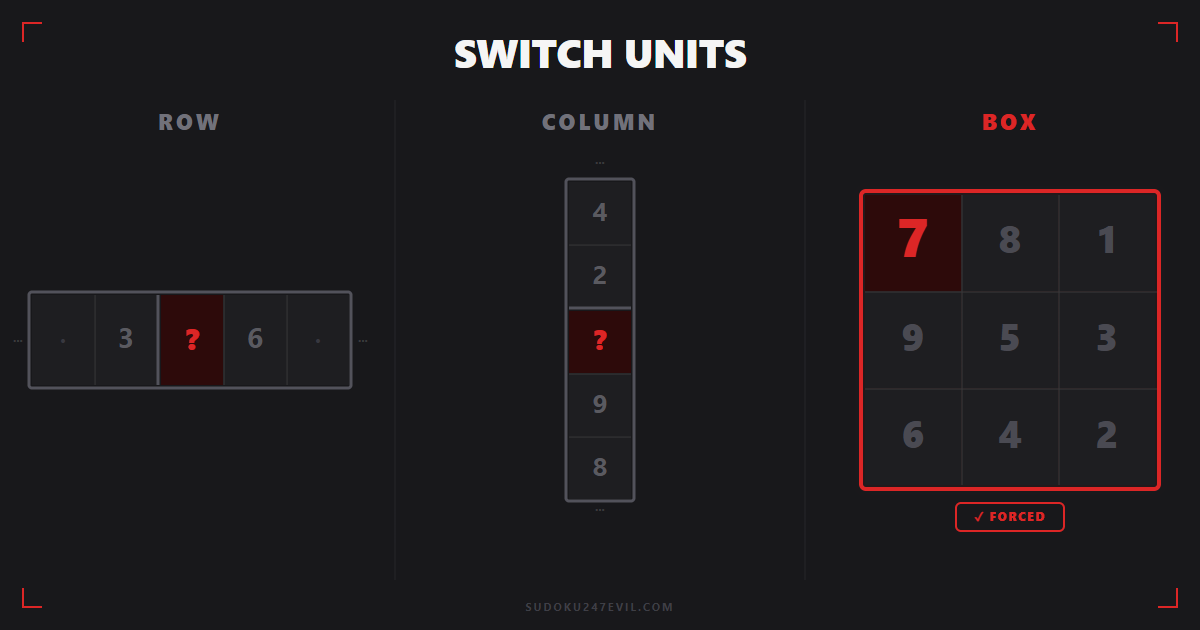
If you’ve been scanning rows, you can be blind to a pattern that’s obvious from the column or box. Tunnel vision is real, and the cure is to deliberately rotate your perspective.
Try this when a region won’t crack:
- Scan it as rows first.
- Then re-scan the same cells as columns.
- Then look at it as boxes.
A digit that looks free across rows can be a locked, forced single when you read the column. Same grid, different lens. Switching units is the cheapest “new technique” you have.
Step 4: Reach for the eliminations you skipped
Still stuck? Now go after the candidate-clearing techniques. None of these place a digit directly — they strip candidates, which then exposes a single.
- A naked pair or hidden pair locks two digits into two cells and frees the rest of the unit.
- A naked triple does the same with three.
- A pointing pair or box-line reduction removes a digit from a whole line based on where it’s confined inside a box.
These are the workhorses of a hard grid. Most stalls clear here, long before you need anything heavier.
Step 5: Bring out the pattern techniques
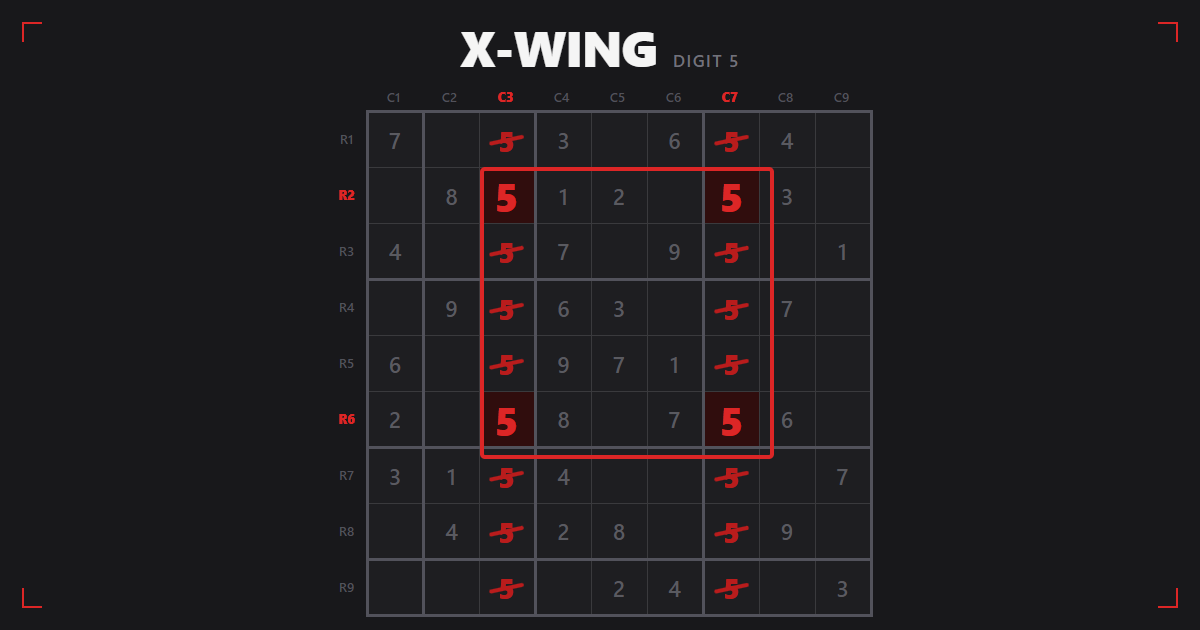
Only when the steps above are genuinely exhausted should you go global:
- An X-Wing when a digit aligns in just two spots across two rows or two columns.
- A Skyscraper when an almost-X-Wing has one offset end you can exploit.
- A Swordfish for the three-line version on the meanest grids.
These cost real effort for one elimination, so they’re a last resort — but on a hard puzzle, that single elimination is often the key that reopens everything.
When none of it works, walk away (really)
If you’ve run the whole checklist twice and the grid still won’t move, stop. Set it down for ten minutes. Coming back with fresh eyes is a legitimate technique — you’ll spot the candidate you kept skating over because your brain finally drops the assumption it was holding.
And if you suspect you’ve made a mistake earlier, it’s better to know. A grid with a stray digit can never be solved cleanly, and no amount of advanced technique will save it.
Get unstuck on a real board
The fastest way to make this checklist automatic is to hit walls on purpose and climb out of them. Spin up a hard sudoku puzzle and use it as your training wall, then graduate to an impossible sudoku board when you want a grid that forces you all the way down the list.
Stuck isn’t a dead end — it’s just the next deduction you haven’t found yet. Work the list, and it shows up.
More from the blog
- How to Solve Hard Sudoku Without Guessing (a Skill)Learn to solve hard sudoku without guessing. A proper puzzle has one unique solution, so there’s always a forced logical move waiting to be found.
- Is Sudoku Hard? Easy to Learn, a Lifetime to MasterIs sudoku hard? It’s easy to learn and hard to master. Learn what truly makes a puzzle difficult and how to grow into evil and expert sudoku grids.
- How to Solve Hard Sudoku: A Step-by-Step Order of AttackLearn how to solve hard sudoku step by step with a clear order of attack, the right techniques to reach for, and pencil-mark habits that keep a grid moving.
Think you can take it? Prove it on a live board.
Play Evil Sudoku